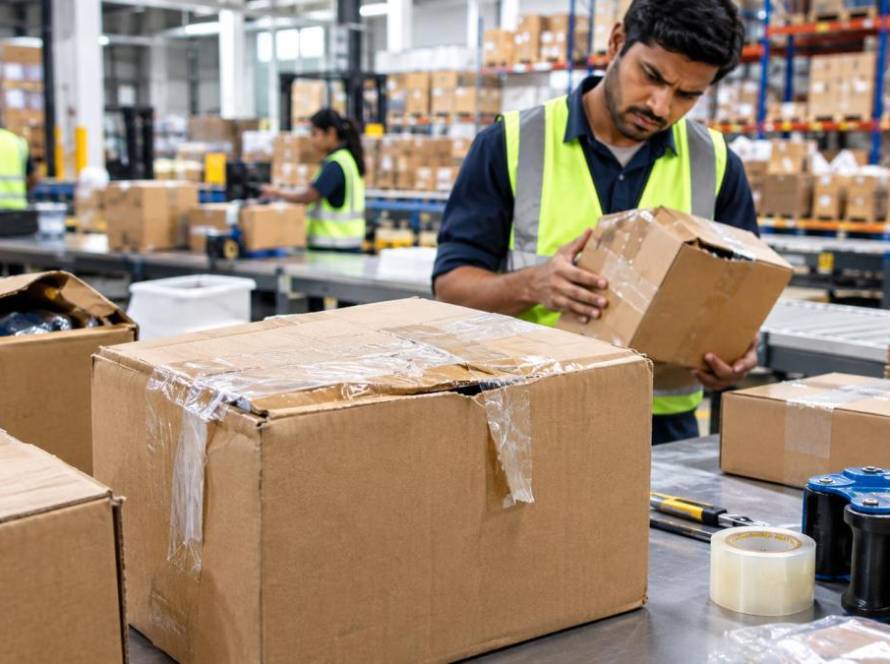
Every failed carton shipment increases replacement costs, delays dispatch operations and creates certain avoidable logistics losses for manufacturers and exporters. But, in many cases, the problem is not about the carton quality but the wrong tape selection for packaging.
The Indian e-commerce logistics market is rapidly expanding, currently valued at over USD 7 billion and projected to cross USD 11 billion by 2031. Just the number is growing, India’s manufacturing and e-commerce sectors are demanding stricter packaging standards across multiple industries. This industrial packaging tape selection guide India helps procurement managers, facility teams, and export packaging professionals in choosing the right industrial tape.
Whether you are planning for FMCG dispatch, warehouse operations, automotive packaging, or export logistics, the right tape type impacts shipment safety and overall operational efficiency.
Types of Industrial Tapes Used in Indian Manufacturing
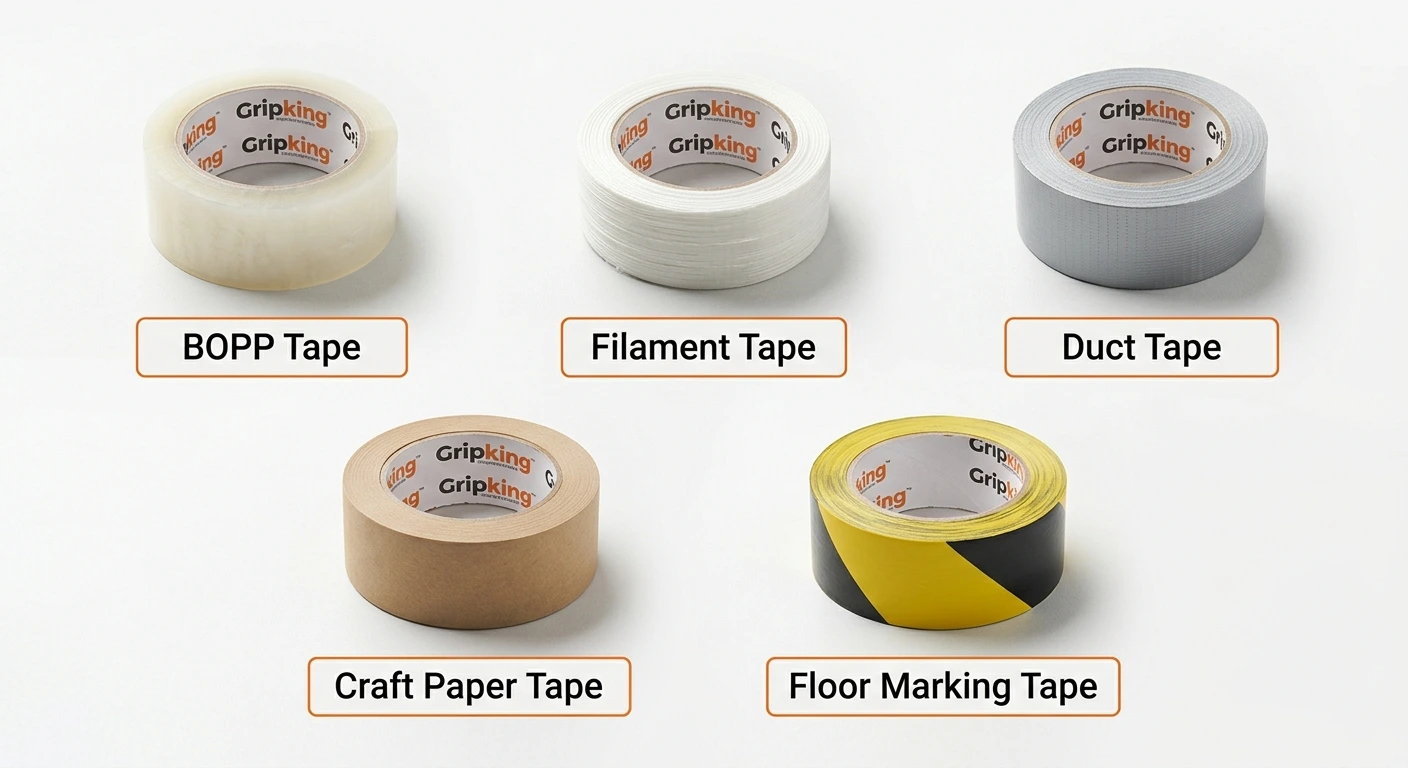
Industrial tapes are no longer limited to simple carton sealing. There are multiple types of industrial tapes used in manufacturing that provide support, packaging, sealing, bundling, safety marking, and warehouse management. Below are the most widely used industrial tape types to consider.
-
BOPP Tape
In manufacturing and logistics, the BOPP tape type is one of the most commonly used packaging tapes. It is also widely preferred for carton sealing, warehouse packaging, ecommerce dispatch, and routine industrial use.
-
Filament Strapping Tape
Filament strapping tape is ideal for providing extremely high tensile strength. This tape type is ideal for heavy-duty bundling, appliance packaging, and exporting large cartons.
-
Duct Tape
Duct tape is another type of tape, but cloth-backed. It is designed for temporary repairs, surface protection, wrapping, sealing, and maintenance work. It offers strong adhesion with excellent flexibility on certain rough surfaces.
-
Craft Paper Tape
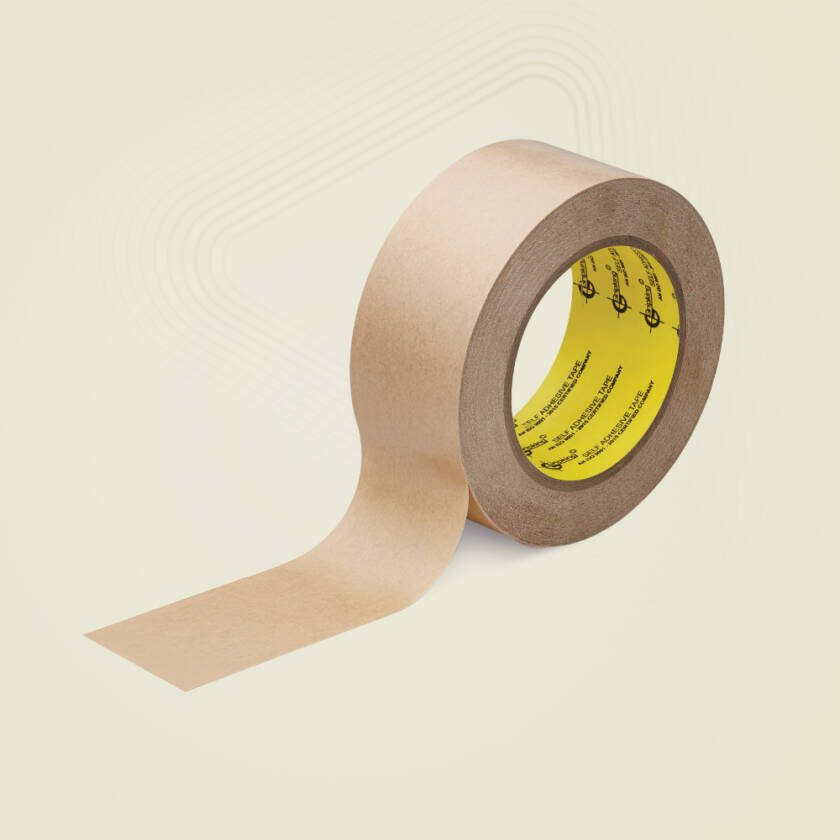
Craft paper tape is an eco-friendly, kraft paper-based packaging tape with a pressure-sensitive adhesive. It is ideal for sustainable packaging, e-commerce dispatch, carton sealing, and businesses looking for a recyclable alternative to plastic-based tapes. Craft paper tape bonds firmly to cardboard and corrugated surfaces, offers good tear resistance, and supports branded printing — making it a preferred choice for exporters and businesses with green packaging commitments. Explore Gripking’s Craft Paper Tape for eco-conscious industrial and export packaging requirements.
-
Floor Marking Tape
Floor marking tape is used to create visual safety zones. This type of tape is also ideal for warehouse pathways, machine boundaries, and material storage areas inside different industrial facilities.
-
Double-Sided Foam Tape
Double-sided foam tape has strong adhesive coatings on both sides and a foam carrier in the centre. This particular type is necessary for mounting, automotive trims, signage applications, and vibration absorption.
How Does Pressure-Sensitive Adhesive Work?
Pressure-sensitive adhesive, commonly known as PSA, also works effectively on different surfaces –
- Instant bond when light pressure is properly applied to the tape surface
- Unlike heat-activated or solvent-based adhesives, this particular type does not require water, heat, or chemical curing.
- The adhesive flows into microscopic surface gaps. This creates strong adhesion through molecular attraction.
This structure allows the tape to adhere quickly while ensuring permanent bonding or removability as required. However, the final result always depends on the adhesive formulation.
What Is Tensile Strength? Why It Matters When Choosing Tape
Tensile strength strongly refers to the maximum pulling force that a tape can withstand before breaking. While choosing such a tape, considering certain aspects truly matters for procurement teams, export teams and packaging teams.
- It is generally measured in Newtons per centimetre (N/cm).
- In the case of industrial packaging, tensile strength determines whether the tape can hold heavy cartons, bundled materials, or stacked loads.
- Low-tensile tapes may fail when cartons are lifted, compressed, or even stacked for long periods.
- High tensile tapes, for example, filament and cross-filament variants, are used in multiple heavy-duty industrial applications.
BOPP Tape vs Filament Tape vs Duct Tape vs Craft Paper Tape: Key Differences Explained
There is a significant difference between BOPP tape and filament tape. However, choosing the right packaging tape depends on carton weight, stacking pressure, transportation conditions, and overall load stability requirements. Below is a table that provides clear insights while assisting you in making the right choice.
| Feature | BOPP Tape | Filament Tape | Cross Filament Tape | Duct Tape | Craft Paper Tape |
| Material | Biaxially-oriented polypropylene film | Glass fibre reinforced polyester | Polyester with bidirectional glass fibre reinforcement | Cloth-backed with polyethylene coating | Kraft paper with pressure-sensitive adhesive |
| Adhesive Type | Acrylic pressure-sensitive adhesive | High-strength synthetic adhesive | Heavy-duty reinforced adhesive | Rubber-based adhesive | Acrylic or natural rubber pressure-sensitive adhesive |
| Tensile Strength | Medium | Very high | Extremely high | Moderate | Moderate |
| Best Use | Light-to-medium carton sealing | Bundling heavy components and palletised loads | Heavy export packaging requiring tear resistance in two directions | Temporary repairs, surface protection, maintenance | Eco-friendly carton sealing, e-commerce packaging, sustainable export dispatch |
| Tear Resistance | Moderate | High | Very high | Good | Moderate |
| Cost | Cost-effective | Higher than BOPP | Premium industrial grade | Moderate | Moderate |
| Recommended Carton Weight | Up to 20kg | 20kg+ | Heavy-duty and export loads | Varies by application | Up to 20kg |
| Stacking Performance | Suitable for standard stacking | Suitable for heavily stacked cartons | Ideal for high stacking pressure and export transit | Not typically used for stacking | Suitable for standard stacking |
How to Choose the Right Tape for Heavy-Duty Carton Sealing
If you want to know how to choose packaging tape for heavy cartons, this is a 4-step structured approach that helps the procurement teams to optimise both cost and packaging reliability.
Step 1: Identify the Carton Weight
Carton weight is one of the most vital factors when selecting tape.
- Under 10kg: Standard BOPP tape or Craft Paper Tape is sufficient
- 10kg to 30kg: Reinforced BOPP or filament tape is strongly recommended
- Above 30kg: Cross filament tape provides better reinforcement and stability
Considering these things are necessary, especially when you have to determine the right packaging tape for heavy cartons and want to use it for exporting logistics, warehouse storage, and industrial dispatch operations.
Step 2: Evaluate Stacking Height
Warehouse stacking pressure significantly impacts the overall tape performance. If cartons are stacked three or more layers high, the tape must resist both the upper compression and side pressure.
Step 3: Consider Environmental Conditions
Temperature, humidity, overall dust exposure, and certain outdoor storage conditions usually affect the adhesive’s performance. Also, you need to check certain conditions such as —
- High humidity may require moisture-resistant adhesive systems
- Outdoor applications need strong UV-resistant tape formulations
- Cold storage environments also require specialised adhesive chemistry
- High-temperature industrial zones may need some proper and heat-resistant tape variants
Selecting the wrong adhesive for the environment can result in adhesive lifting, carton opening, or weakened bonding strength.
Step 4: Calculate Cost Per Sealed Carton
Many companies also focus only on roll pricing instead of actual packaging efficiency. Using premium reinforcement tape for lightweight cartons unnecessarily increases packaging cost. This can lead to product-damage claims and shipment rejections.
The correct approach helps to calculate the total cost per successfully sealed carton, not per the roll.
Floor Marking Tape Colors: What Each Color Means in Industry
In modern manufacturing facilities, warehouses, and logistics centres, floor marking tapes are an important part of 5S and visual factory management systems. They help improve workplace organisation, worker safety, material flow, and operational efficiency by creating clearly visible zones inside industrial environments.
5S and Visual Factory Standards
5S methodology mainly focuses on workplace organisation, cleanliness, standardisation, and overall visual control. Floor marking tapes support these systems by separating certain operational areas inside factories and warehouses.
Industries commonly use floor marking tapes for:
- Pedestrian walkways
- Forklift movement lanes
- Material storage zones
- Machine operating boundaries
- Hazard identification areas
- Inspection and dispatch sections
- Emergency access routes
Compared to different painted floor markings, industrial floor tapes are easier and quicker to install, better to replace, and flexible even when factory layouts change. On the other hand, heavy-duty floor marking tapes can withstand the proper forklift movement, warehouse traffic, moisture, and different industrial wear and tear.
Standard Floor Marking Tape Colour Codes
Floor marking tape colors and their meaning can convey detailed insights. These are used for different purposes and different zones.
- Yellow
Yellow floor marking tape is also used for different walkways, aisles, and pedestrian movement zones. - White
White tape identifies workstations, equipment placement zones, or certain operational boundaries. - Red
Red floor marking tape is used in danger zones, rejected material areas, scrap zones, or even for emergency-related markings. - Blue
Blue tape generally indicates raw material storage or different component placement areas. - Green
Green floor tape is mainly used in finished-goods zones, safe areas, or different approved inventory sections.
Important Note on Industrial Colour Standards
Floor marking colour systems usually vary depending on the company SOPs, industry regulations, and regional standards such as OSHA guidelines or Indian industrial safety practices. Therefore, the right procurement teams should clearly state the required colour-coding standards in RFQs while meeting certain vendor specifications. These ensure consistency across different facilities.
Gripking Floor Marking Tape Range
Gripking offers the best quality industrial-grade floor marking tapes, which are specifically designed for warehouses, factories, production facilities, and commercial spaces. Also, there is a wide range of durable floor tapes, suitable for high-footfall industrial environments, warehouse aisle marking, safety zoning, and visual factory systems.
Businesses can also successfully source multiple colour variants, custom widths, and specialised marking solutions depending on their operational requirements. Explore Gripking’s industrial-grade floor-marking tape range for warehouse safety, factory zoning, and 5S implementation.
Procurement Tips: Sourcing Industrial Tape in Bulk in India
Industrial tape procurement should always be an advanced and specification-driven process rather than purely price-driven. It is also advisable to focus on certain technical requirements in their proper RFQ documentation.
Key Specifications to Include in an RFQ
A proper industrial tape RFQ should include:
- Tape type
- Tape width
- Core size that is 2-inch or 3-inch
- Roll length
- Adhesion value in N/cm
- Tensile strength
- Adhesive type
- Temperature resistance
- Application environment
- Printing or branding requirements
These type of proper and detailed technical specifications significantly helps manufacturers who always recommend the correct tape grade while preventing supply mismatches.
MOQ Considerations
Most industrial tape manufacturers in India operate with minimum order quantities ranging from approximately 500 to 1,000 rolls. However, the number depends on tape type and the necessary customisation requirements.
Gripking supports both SME buyers and enterprise-scale industrial procurement with flexible supply capabilities across multiple tape categories.
Advantages of Domestic Sourcing
Domestic sourcing always has certain advantages. The manufacturing ecosystem has significantly strengthened domestic adhesive tape production. Furthermore, sourcing such tapes locally from Indian manufacturers also helps businesses to have the best results:
- It reduces import dependency
- Lower freight costs
- Avoid import duties
- Improve delivery timelines
- Access faster and after-sales support
- Simplify repeat procurement cycles
Businesses searching for a reliable and dependable B2B adhesive tape supplier can benefit from working with the best domestic manufacturers who provide consistent industrial supply support.
Why Gripking Tapes Is India’s Trusted B2B Packaging Tape Supplier
Founded in Ahmedabad in 2011, Gripking has significantly developed an excellent presence in the Indian adhesive tape manufacturing sector. All credit goes to their consistent quality standards and industrial supply capabilities.
With more than 13 years of manufacturing experience, the company supplies a wide range of industrial tape solutions for leading manufacturers, warehouses, exporters, multiple infrastructure projects, and commercial businesses.
However, if you check our portfolio, you will find:
- BOPP tapes
- Filament tapes
- Duct tapes
- Craft paper tapes
- Floor marking tapes
- Double-sided foam tapes
- Foil tapes
- Masking tapes
- Butyl tapes
- Speciality industrial tapes
The company also supports the best OEM manufacturing and private-label requirements for many distributors and enterprise buyers.
Furthermore, based on its pan-India distribution network, they strongly enable product availability across major industrial regions, including Ahmedabad, Mumbai, Pune, Delhi NCR, Bengaluru, Chennai, Hyderabad, Kolkata, and other manufacturing hubs.
Gripking, as a reliable BOPP tape manufacturer in India follows ISO-grade quality testing processes with strict production monitoring and quality assurance standards. They design each tape to minimise manufacturing defects and maintain product consistency.
Complete Industrial Adhesive Tape Solutions for Indian Businesses
Are you looking for reliable industrial adhesive tape solutions for better manufacturing, export packaging, warehousing, or the best OEM supply? Explore Gripking’s complete range of BOPP, filament, duct, craft paper, floor marking, and speciality industrial tapes that are specifically designed for Indian businesses.
Contact the Gripking team today and discuss bulk orders, OEM requirements, custom specifications, and pan-India industrial supply support.
FAQ Section
Q1. What is the difference between BOPP tape and filament tape?
If you want to learn the basic difference between BOPP tape and filament tape, the BOPP tape is a standard and lightweight polypropylene plastic sealing tape. It is also used for everyday carton packaging. On the other hand, the correct filament tape is properly considered a heavy-duty one that ensures extreme tensile strength.
Q2. Which tape is best for sealing heavy export cartons?
Filament tape or cross filament tape is basically preferred for sealing heavy export cartons. These also have higher tensile strength and strong resistance that can successfully tear under load pressure.
Q3. How does pressure-sensitive adhesive work?
Pressure-sensitive adhesives develop a proper and instant bond even under light pressure. It does not require water, solvents, or heat activation while adhering overall quickly to different packaging surfaces.
Q4. What do floor marking tape colors mean?
Floor marking tape colours are mainly used for visual safety management. While the yellow ones usually mark aisles, red indicates danger zones, blue marks the best materials and similarly, green identifies finished goods. White is used to define workstations.
Q5. Can Gripking supply industrial tape in bulk for OEM use?
Yes. Gripking can supply industrial tape in bulk, which is ideal for OEM use. From OEM manufacturing and private-label adhesive tape requirements, they provide the best options, which are ideal for distributors, exporters, and enterprise buyers.
Q6. What is craft paper tape and when should I use it?
Craft paper tape is a kraft paper-based packaging tape with a pressure-sensitive adhesive. It is the ideal choice for businesses that require eco-friendly, recyclable, and biodegradable packaging solutions. It bonds securely to cardboard and corrugated surfaces and is well-suited for e-commerce dispatch, standard carton sealing, and export packaging where sustainable packaging compliance is required. Explore Gripking’s Craft Paper Tape for sustainable packaging needs.