Every April, the same problem repeats across Indian construction sites and industrial facilities. A crack is sealed with the wrong tape, the monsoon arrives, and within weeks the leakage returns. The result is costly rework, damaged interiors, delayed operations, and contractor disputes.
The problem is the tape. Selecting the wrong waterproofing tape for roof leaks India conditions is one of the most expensive mistakes in construction and maintenance. Generic tapes peel under UV exposure or lose adhesion the moment humidity spikes.
This guide is for contractors, factory maintenance managers, and procurement heads, not DIY hobbyists. By the end, you will know exactly which tape suits which substrate and how to apply it correctly.
Why Waterproofing Tape Matters Before India’s Monsoon
Across most Indian regions, the pre-monsoon repair window runs from April to May. Once humidity rises above 80 percent during June, adhesive application becomes less reliable and surface bonding weakens significantly.
India’s waterproofing market is mainly projected to reach $1.94 billion by 2031, and a significant portion of that growth reflects rework spend. However, the cost of leaks that were never sealed the first time correctly.
Industrial waterproofing tape significantly differs from the regular adhesive tape, especially in three key areas:
- Backing material strength
- Adhesive chemistry
- UV and moisture resistance
Moreover, a proper waterproofing tape helps maintain proper adhesion through repeated wet-dry cycles. This also helps to handle rooftop heat exposure with seasonal expansion that standard utility tapes cannot.
Gripking Tapes, one of the leading waterproofing tape manufacturer in India, has been manufacturing in Ahmedabad since 2011. It designs and manufactures industrial waterproofing tape solutions. These are ideal for India’s temperature and humidity extremes, where the rooftop surfaces, exceed 65°C and seasonal swings of 40 degrees or more.
4 Types of Waterproofing Tape Used in Indian Construction

There are mainly 4 types of waterproofing tape for construction. Each tape type has a distinct adhesive base, backing, and target surface. Using the wrong type on the wrong surface is a specification failure.
- Butyl Tape
Butyl tape is a synthetic rubber-based waterproofing tape designed for long-term sealing applications. It forms an airtight and perfect watertight bond under pressure. The tape also works perfectly over metal sheets, concrete, aluminium flashing, roofing joints, and parapet cracks. - Aluminium Foil Tape
The aluminium foil tape has a high-performing adhesive layer. It ensures resistance against moisture, heat, and UV exposure. The tape is ideal for HVAC ducts, insulation joints, roof flashing, and reflective sealing applications. - Foam Tape (Double-Sided)
Double side foam tape has a proper core coated with adhesive on one or both sides. Also, the primary role of this tape is to provide ideal gap-filling, cushioning, and vibration damping. The tape works best on window frames, glazing joints, cladding gaps, and uneven surfaces where the proper compression sealing is necessary. - PTFE Tape
PTFE tape is a non-adhesive thread sealing tape. It is used mainly for threaded pipe joints. The tape prevents leakage in plumbing and industrial piping systems. It is strongly resistant to chemicals, moisture, and temperature fluctuations.
What Is Aluminum Foil Tape Used For in Waterproofing?
In HVAC systems, it seals different duct joints and blocks moisture ingress. This is a real problem in Indian commercial buildings during high-humidity months. In roofing, it strongly handles flashing at wall-to-roof junctions, around pipes, and at different insulation board edges.
Also, its metallic backing adds a perfect reflective layer that strongly reduces heat absorption on certain exposed surfaces.
How Does Butyl Rubber Tape Work? A Simple Explanation
Butyl rubber tape works perfectly through a pressure-activated sealing mechanism. The material is developed from a cross-linked polymer that flows slightly under compression, allowing it to fill microscopic surface gaps.
This conformability is what makes butyl tape much more effective on irregular or rough substrates. These include concrete, metal roofing sheets, and parapet walls.
Key performance characteristics include:
- High elongation at break, often above 300 percent
- Near-zero water vapour transmission
- Permanent tack adhesion
- UV-resistant backing layers
A properly installed 2mm butyl tape strip can even cover a hairline crack in a concrete parapet. Another best part about this is that it can continue performing through multiple monsoon seasons without losing adhesion.
Butyl Tape vs Foam Tape: What Is the Difference?
Contractors sometimes treat these as interchangeable. They are not.
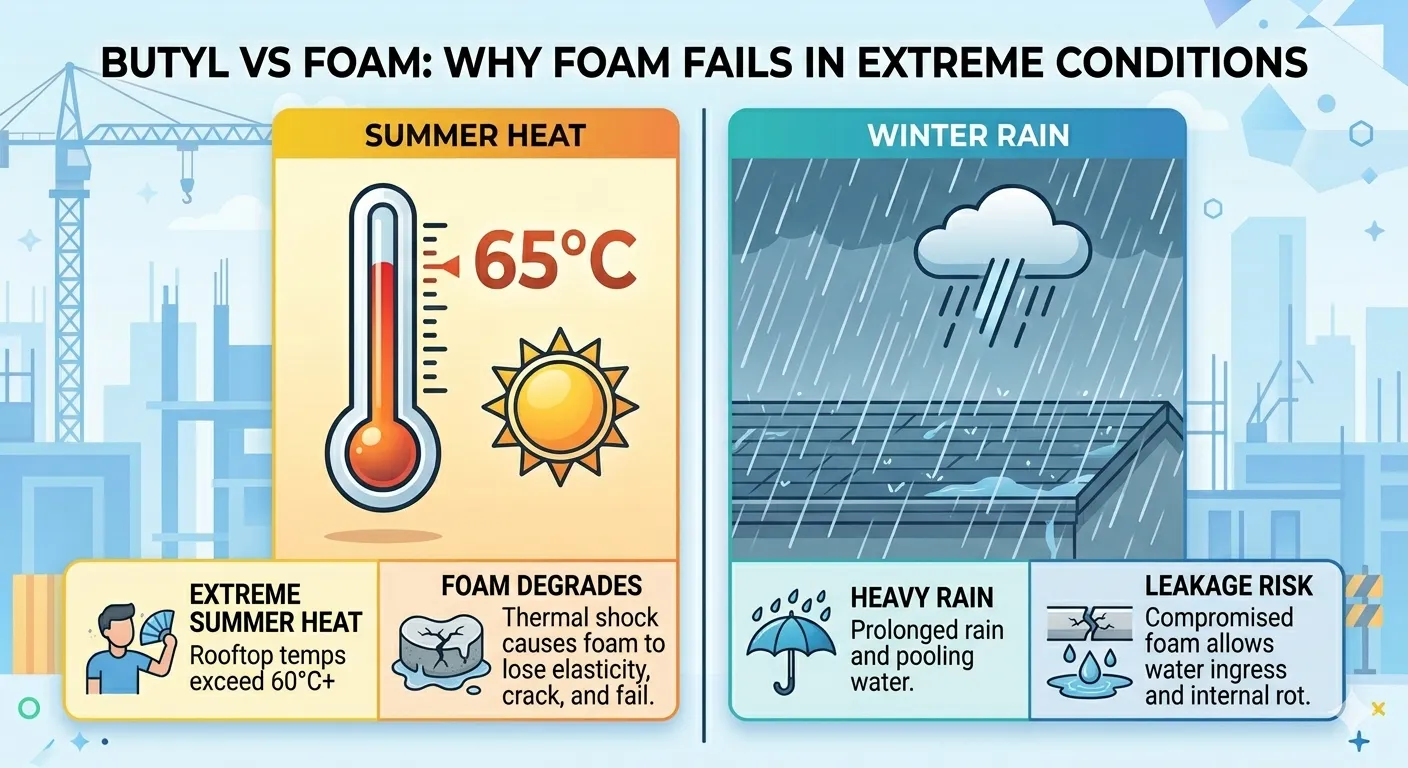
- Butyl tape: This tape has solid rubber that compresses under pressure, high heat resistance (65°C+). This is best on concrete, metal, masonry, and asphalt.
- Foam tape: This is a compressible and closed-cell foam used to fill wider gaps. However, the adhesive softens above 60°C. Hence, it is suited for indoor joints, window and door frames, and vibration dampening.
The critical error: using foam tape on a hot metal or asphalt roof. Indian rooftop temperatures reach almost 60–70°C in summer. At those temperatures, the foam adhesive softens and the bond releases. This leaves the joint fully exposed to the next monsoon. Butyl tape is the only appropriate choice for sealing exposed rooftops.
Below is a table that shows the significant difference between butyl tape and foam tape at a quick glance.
| Feature | Butyl Tape | Foam Tape |
| Structure | Solid rubber-based tape | Compressible foam core |
| Primary Function | Waterproof sealing | Gap filling and cushioning |
| Primary Function | High | Moderate |
| Best Surface | Concrete, metal, roofs | Window frames, uneven joints |
| Weather Resistance | Excellent | Limited in extreme heat |
| Typical Use | Roof waterproofing | Vibration dampening |
Choose butyl tape for:
- Rooftop waterproofing
- Metal sheet joints
- Concrete cracks
- High-temperature environments
Choose foam tape for:
- Window and door sealing
- Expansion gaps
- Interior applications
- Vibration control
The two tapes are not interchangeable. Hence, applying the perfect foam tape on a hot roof can cause adhesive breakdown. You may find premature failure, too, during peak summer heat.
How to Seal Roof Leaks Before the Monsoon (Step-by-Step)
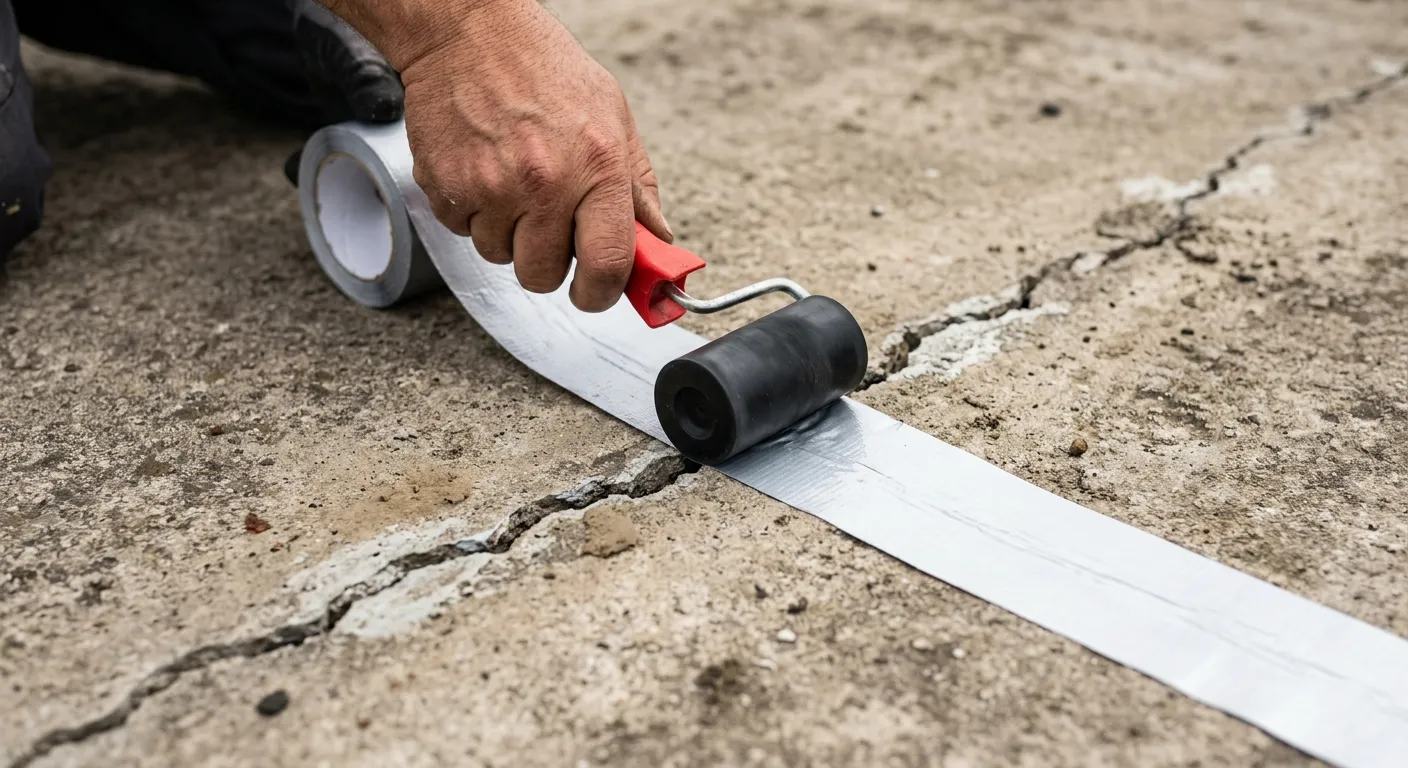
Pre-monsoon sealing always requires proper inspection, surface preparation, the right product selection, and proper application. Rushing is the prime reason why most leaks reappear. Below are certain steps on how to seal roof leaks before monsoon India.
- Inspect and clean: Walk the entire roof and mark every crack and joint gap. Remove debris, old sealant, and dust. The surface must be completely dry before applying and after at least 48 hours of no rain or water.
- Choose the right tape: Butyl tape is used for flat concrete or masonry roofs. Aluminium foil tape for metal sheet strongly overlaps HVAC ducts. PTFE tape manufacturers design the best PTFE tapes, which are ideal for proper threaded pipe joints. Double-sided foam tape for indoor window and door frame gaps.
- Apply with firm pressure: Use a rubber roller from the centre and run it outward to eliminate air pockets. Also, start working from the bottom to the top to ensure residual moisture drains away from the bond.
- Overlap seams by at least 50mm: Under hydrostatic pressure during heavy rain, water exploits underlapped joints. At parapet-to-roof junctions, increase the overlap to 75mm.
- Test before monsoon: After 24 hours of cure time, soak sealed areas with a hose and check the ceiling below. Do this in May while there is still time to re-seal any failures.
How to Apply Waterproofing Tape on Concrete Surfaces
Concrete is porous. On freshly repaired or highly porous surfaces, it is necessary to apply a bitumen or acrylic primer. After the application, allow it to dry fully before taping. Primer closes surface pores and significantly extends tape life. Never apply waterproofing tape on concrete below 10°C; cold temperatures reduce adhesive tack and lead to edge lift as temperatures cycle.
Industry Applications: Where Each Tape Works Best
Each tape is designed differently, and they are used for multiple purposes. Below, those points are mentioned.
- Residential Construction
Butyl tape on rooftop terrace parapet joints and drain surrounds. PTFE tape on overhead pipe joints. Foam tape for bathroom tile or window frame gaps. Key risk: generic tender descriptions invite substitution with inferior grades. - Commercial Construction
Butyl tape behind external wall cladding joints. Aluminium foil tape manufacturers suggest premium types of aluminium tapes for accurate window flashing. However, check for the adhesive type and minimum peel strength, not for any generic category. - Industrial Facilities
PTFE tape for chemical plant pipe bundling at elevated temperatures. Aluminium foil tape on HVAC ducts before humidity loads increase. Butyl tape on structural expansion joints requiring high elongation. Procurement note: specify tape grade in all RFQs. A line reading only ‘waterproofing tape, 50mm’ gives suppliers full latitude to bid on the cheapest product.
For procurement managers, it is necessary to mention the proper tape grade, backing type, thickness, and adhesive composition in RFQs and tenders. Such generic specifications allow you to have the best quality “waterproofing tape” instead of using low-grade options.
Why Choose Gripking Tapes for Waterproofing Applications
Gripking Tapes are known as one of the best Butyl tape manufacturers in India. The company has been manufacturing top-grade industrial adhesive tape solutions in Ahmedabad since 2011. They are specialised in engineering the best products that are specifically for Indian climate conditions. From extreme summer rooftop temperatures to heavy monsoon exposure, the company strongly focuses on high-performance waterproofing applications for construction and industrial use.
Key advantages include:
- 100% natural rubber-based butyl formulation designed for strong waterproof sealing
- Tested for Indian heat, humidity, and seasonal weather fluctuations
- Available in widths ranging from 12mm to 150mm
- Custom lengths and OEM supply options for industrial requirements
- Pan-India distributor network supporting both bulk and retail orders
Check and view the full link from the Gripking Butyl Tape Range.
Call to Action
The pre-monsoon sealing window is from April to May. By June, you are either sealed correctly or reacting to leaks. Gripking Tapes manufactures industrial waterproofing tapes built for Indian conditions, butyl tape for rooftop joints, aluminium foil tape for HVAC ducts, PTFE tape for pipe sealing, and double-sided foam tape for structural gaps. Full range available for bulk ordering with pan-India delivery.
Browse the full product range available at: gripkingtapes.com. What’s more? Seal it right before the rains. One correct application now is worth four repair calls in August.
FAQs
Q1. What is the best waterproofing tape for roof leaks in India?
Butyl tape is ideal for concrete, metal, and masonry rooftops. These tapes can handle 65°C+ and maintain adhesion through monsoon and different wet-dry cycles. Aluminium foil tape is used for metal sheet roofs and HVAC duct seams.
Q2. How does butyl rubber tape work?
The butyl rubber tape works under pressure at the microscopic level. It also helps fill pores and cracks, forming a continuous waterproof barrier. It has a permanent tack and has water vapour transmission. This means the moisture cannot migrate through the tape.
Q3. What is the difference between butyl tape and foam tape?
Butyl tape is a solid rubber that conforms under pressure, has high heat resistance, and is well-suited for outdoor use. Foam tape is also easily compressible to fill wider gaps, but softens at high temperatures. This makes the tape unsuitable for use on rooftops.
Q4. Can waterproofing tape be used on concrete?
Yes. Waterproofing tape can be used on concrete. surfaces with bitumen or acrylic primer before applying. Surface must be dry and above 10°C. Butyl tape is actually recommended for concrete substrates.
Q5. Which tape should I use for pipe joints before the monsoon?
PTFE tape for all threaded pipe joints in water supply, plumbing, and gas lines. For outer wrapping on larger pipe joints, butyl tape provides additional protection.
Q6. Does Gripking offer bulk waterproofing tape supply?
Yes. Gripking supplies bulk and retail quantities with custom lengths for OEM orders. Butyl tape available in 12mm to 150mm widths. Contact Gripking for grade specifications and pan-India delivery.