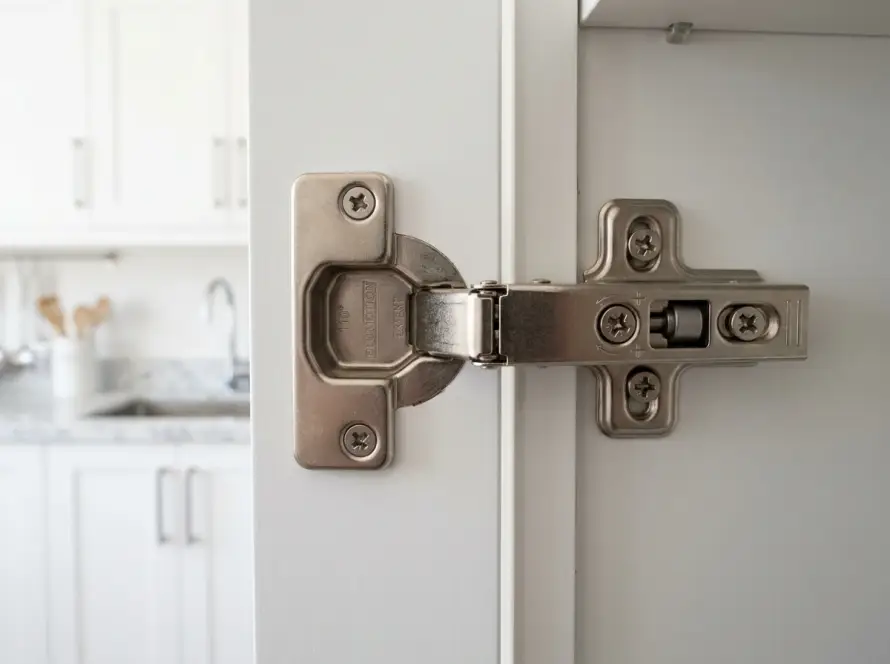
From the outside, two drawers might look completely identical. And yet one glides open with effortless precision, and the other starts sticking, wobbling, or wearing out far sooner than you imagined. The difference is never about the plywood, finish, or the craftsmanship’s quality of craftsmanship. In most cases, it’s the hardware working silently behind every movement, determining the maximum weight the drawer can carry and still function smoothly.
That’s why understanding what is a telescopic channel becomes the first step towards knowing why modern cabinetry has moved past the use of conventional drawer runners. Known to set the industry standards, it delivers full extension, bears a high load capacity, and offers long-term reliability across residential, commercial, and industrial furniture units.
Having said that, we have prepared a detailed guide on the telescopic channel, its primary use cases, and its benefits. Also, we have shared tips that will help you choose the right one for your furniture project.
Having said that, we have prepared a detailed guide on the telescopic channel, its primary use cases, and its benefits. Also, we have shared tips that will help you choose the right one for your furniture project.
What is a telescopic channel?
A telescopic channel is a metal drawer slide mechanism. It’s made from interlocking, extendible rails that allow the drawers to open and close smoothly while supporting heavy loads. Unlike fixed or friction-based slides, its moving sections are precision-engineered. That’s why it can offer controlled, low-friction movement and comparatively greater extension.
In a standard telescopic channel, you will find an outer rail that has to be fixed to the cabinet and an inner rail that’s attached to the drawer. In most modern designs, there is a middle rail too. It allows the drawer to extend further without compromising its stability.
How do telescopic channels work?
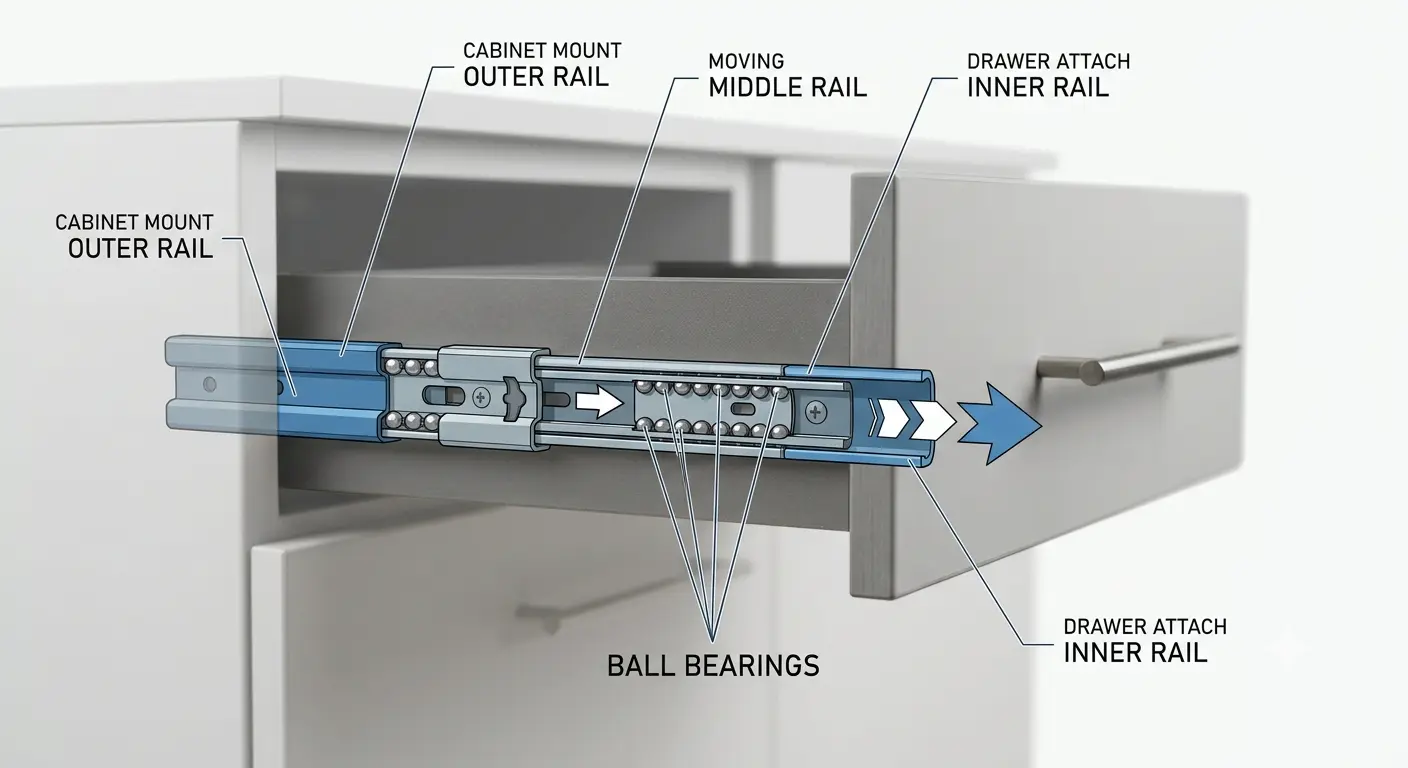
A multi-rail system operates behind the telescopic channel, ensuring controlled, stable, and almost frictionless drawer movements. Here’s how it functions!
- When you pull the drawer, precision ball bearings or rollers move within specially designed tracks between the rails. It significantly eliminates friction, allowing smooth opening and closing. To top it off, it also minimizes wear on both the channel and the furniture.
- The interlocking rail sections then extend one after another as the drawer moves outward. Most standard designs available on the market offer both partial and full extensions. So, you can access the entire drawer’s inner chamber without feeling it wobbling or sagging.
- Once the drawer moves, the load is distributed evenly. This improves stability, increases the load-bearing capacity, prevents sagging, and helps the channel deliver consistent performance for years to come.
Key uses of telescopic channels
These slides are primarily used in furniture designs where the drawers require smooth movement, reliable load support, and long-term durability. Popular telescopic channel uses include:
- Kitchen cabinet drawers for smooth, full-extension movement
- Modular furniture drawers and wardrobes for better functionality
- Office desks and filing cabinets for reliable, constant operation
- Industrial toolboxes and storage units for heavy-duty load support
- Retail display and storage fixture drawers for easy access
Why do furniture manufacturers prefer telescopic channels?
Most furniture manufacturers prefer telescopic channels as these hardware pieces combine durability with excellent user experience. Their unique ball-bearing design guarantees smooth and silent drawer movement even after thousands of operating cycles.
Compared to traditional slides, they can support heavier loads without showing signs of wobbling or sagging. Thanks to their longer service life, you can rest assured that maintenance needs won’t trouble your clients in the coming years.
Types of telescopic channels
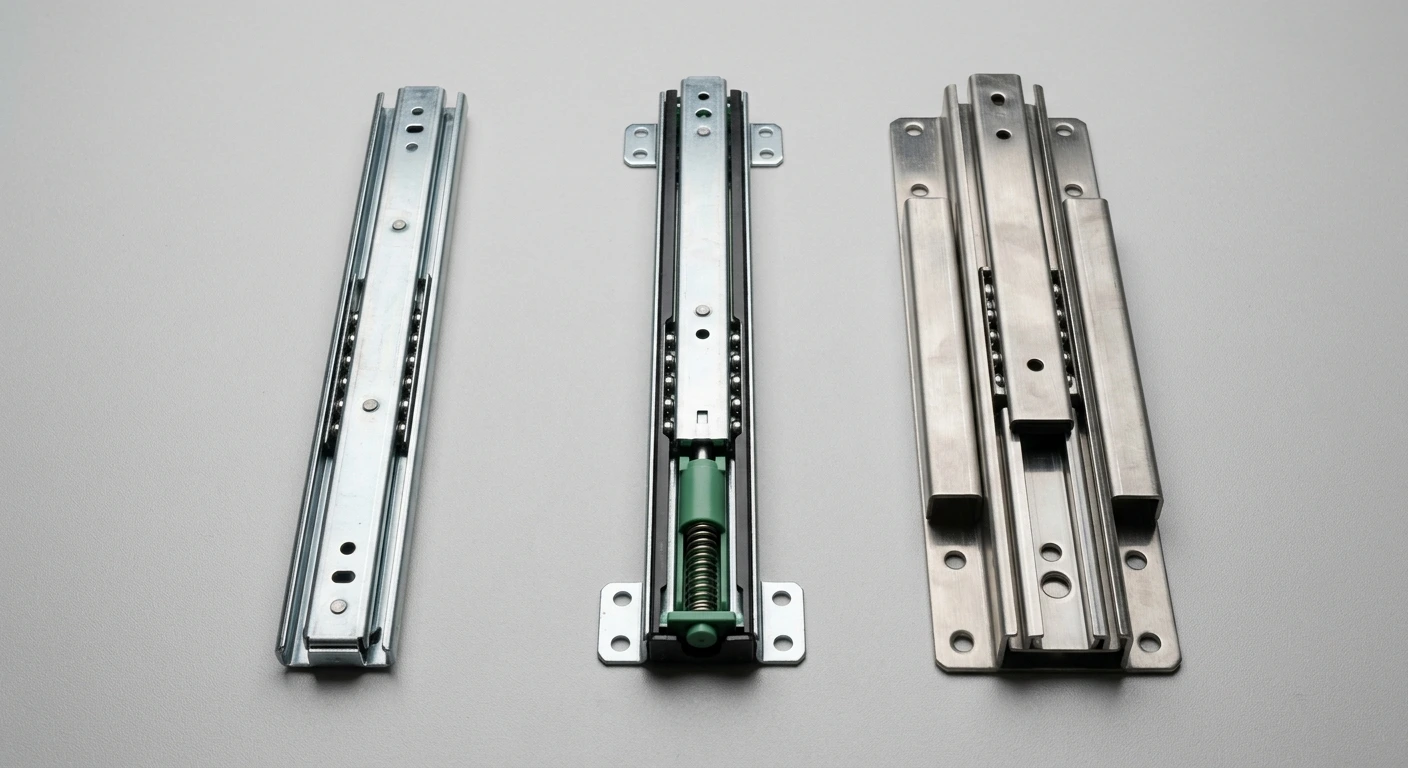
Standard (ball-bearing) telescopic channels
These drawer sliders use precision steel ball bearings to ensure smooth, low-friction drawer movement every time you pull it open or push it closed. Our SS Telescopic Channel is suitable for everyday residential and commercial furniture, offering reliable load capacity, full and partial extension options, and impeccable performance for kitchen cabinets, wardrobes, office desks, and storage units.
Soft-close telescopic channels
These telescopic channels feature an integrated damping mechanism that slows the drawer during the final stage of the closing motion. This prevents slamming, reduces noise, protects the furniture from impact damage, and enhances the overall experience. Our Soft Close Telescopic range is a popular choice for premium residential and commercial units — and pairs well with soft-close auto hinges for a fully noiseless cabinet system.
Heavy-duty/industrial telescopic channels
Engineered to support higher loads than standard models, these drawer runners like our Telescope Runner are built with thicker steel and reinforced construction, delivering exceptional strength, stability, and durability. From industrial storage to tool cabinets, machinery drawers, and server racks, these are used mostly in demanding applications.
SS (stainless steel) vs MS (mild steel) variants
Stainless steel channels offer excellent corrosion resistance, which is why they are perfect for humid, wet, and corrosive environments like labs and kitchens. As for the mild steel channels, they offer excellent strength and cost efficiency. That’s why they are ideal for general applications where exposure to moisture and harsh conditions is minimal to almost negligible.
Telescopic channels vs other drawer slide systems
The right drawer type will depend on multiple factors, like load capacity, usage frequency, budget, and the intended furniture application. Below, we have explained the key differences between the three most common drawer slider options.
|
Feature |
Telescopic Channel |
Friction Slides |
Roller Slides |
| Operating mechanism | Ball-bearing rails with interlocking sections | Sliding surfaces move through direct friction | Nylon or plastic rollers guide the drawer movement |
| Movement | Smooth, stable, and low-friction | Less smooth and becomes stiffer over time | Smoother than friction slides but less refined than telescopic channels |
| Extension | Available in full or partial extension | Usually partial extension | Primarily partial extension |
| Load capacity | High; suitable for medium to heavy loads | Low; best for lightweight drawers | Moderate; suitable for light to medium loads |
| Durability | Excellent for frequent, long-term use | Lower due to higher wear from friction | Good for moderate daily use |
| Noise level | Quiet, especially with soft-close variants | Can become noisy as components wear | Generally quiet but may become noisy over time |
| Best applications | Modular kitchens, wardrobes, office furniture, industrial storage | Basic residential furniture with light-duty use | Home furniture, office desks, and light-storage cabinets |
| Cost | Higher initial cost but better long-term value | Lowest-cost option | Moderately priced between friction and telescopic slides |
| Best choice when | Durability, load capacity, and smooth operation are priorities | Budget is the primary consideration, and loads are minimal | A balance between affordability and everyday performance is required |
How to choose the right telescopic channel?
Load capacity requirements
Telescopic channels come in different load ratings, usually ranging between 30 kg and 100+ kg per pair. That’s why you should select a channel with a load capacity that exceeds the drawer’s weight when fully loaded. This will ensure no wobbling, sagging, or wear and tear after frequent opening and closing operations.
Drawer length and cabinet depth
The standard telescopic channel sizes you will get range from 250 mm to 700mm in length. So, choose the channel that matches your drawer’s length perfectly. Also, make sure it can fit into the cabinet’s depth without protruding. That’s because an oversized channel cannot retract completely, while an undersized one will reduce extensibility and compromise storage accessibility.
Full vs partial extension needs
Full-extension telescopic sliders will help you open the drawer completely, ensuring you can access every corner without worries. That’s why these are ideal for deep kitchen drawers, filling cabinets, and industrial storage. Partial-extension channels, on the other hand, will cost less but will leave a portion of the drawer concealed.
Soft-close vs standard mechanism
If the furniture in question is meant to be used frequently or positioned in premium residential or office spaces, it’s best if you invest in a soft-close channel. That’s because it helps prevent sudden slamming and operates almost noiselessly. Standard ball-bearing channels, on the contrary, are suitable for budget furniture units or industrial applications where durability is the top priority.
Material used for construction
For laboratories, kitchens, healthcare facilities, or coastal locations, stainless steel telescopic channels are perfect. That’s because this material offers excellent resistance to corrosion and long-term moisture exposure. Zinc-plated or powder-coated mild steel channels are more economical, but are suited for dry environments.
What procurement teams/ dealers should specify?
Selecting just the best telescopic channel for a kitchen cabinet, wardrobe, or toolbox drawer won’t help you with the correct procurement. Rather, you need to specify the following attributes upfront so that you won’t have to deal with compatibility issues, installation delays, or inconsistent quality later on.
- Always specify the rail length, load rating, and mounting dimensions so that the chosen channel is compatible with the drawer design and the intended purpose.
- Confirm if the project requires a full extension, partial extension, or over-travel channel based on the accessibility needs.
- Discuss bulk pack quantities, OEM branding, barcode labelling, and custom packaging requirements beforehand.
- Define the required surface finish, like zinc-plated, powder-coated, or stainless steel, to match both the environment and corrosion-resistance needs.
Common installation mistakes
- Even a high-quality telescopic channel can underperform if the installation is incorrect in the first place. So, below we have outlined some of the common mistakes you should be aware of.
- Installing a channel that’s shorter or longer than the drawer length will limit extensibility, affect alignment, and reduce overall stability.
- Even the slightest misalignment between the left and right channels will create too much friction, causing the drawer to wobble, bind, or fail to close completely.
- Loading drawers beyond the channel’s rated capacity will place excessive stress on the ball-bearing assembly and rails, thereby speeding up wear.
- Failing to clean accumulated dust, debris, or corrosion can increase friction and cause a decline in smooth channel operation.
Why choose Gripking telescopic channels?
At Gripking, we manufacture telescopic channels for drawers in-house to ensure consistent quality, precise dimensions, and reliable performance across every production batch. Our product range includes multiple rail lengths, load capacities, and finish options to cater to different residential, commercial, and industrial needs.
Whether you are a dealer, a distributor, or an OEM partner, we offer customization and private-label manufacturing benefits. Backed by efficient bulk production capabilities and a stronger dealer distribution network across India, Gripking brings to you reliable supply, competitive pricing, and hardware solutions tailored to the evolving market and user demands.
Looking for reliable, in-house-manufactured telescopic channels for your furniture or dealership needs? Contact Gripking Tapes today for custom specifications and bulk procurement support.
FAQs
1. What is a telescopic channel used for?
A telescopic channel is used to provide smooth, stable, and extendable drawer movement in wardrobes, kitchen cabinets, office furniture, industrial storage units, and retail fixtures.
2. What’s the difference between a telescopic channel and a drawer slide?
There’s no considerable difference between these two furniture hardware units. A telescopic channel is a special type of drawer slide that uses interlocking rails and ball bearings for smooth, controlled drawer movement.
3. Are telescopic channels better than ball-bearing slides?
No. A standard telescopic channel is itself based on ball bearings. It’s these small units that allow the slide to open and close frictionlessly, ensuring minimal wear and tear.
4. What size telescopic channel do I need for my cabinet?
Always choose a telescopic channel that will match your drawer’s length and fit within the cabinet depth. This ensures proper extension, alignment, and smooth operation.
5. Can telescopic channels support heavy loads?
Yes, depending on the model, telescopic channels can support loads ranging from 30 kg to 100+ kgs per pair.
6. What’s the difference between SS and MS telescopic channels?
SS telescopic channels offer superior corrosion resistance for humid environments. On the other hand, MS channels provide a stronger, more economical solution for general indoor applications.