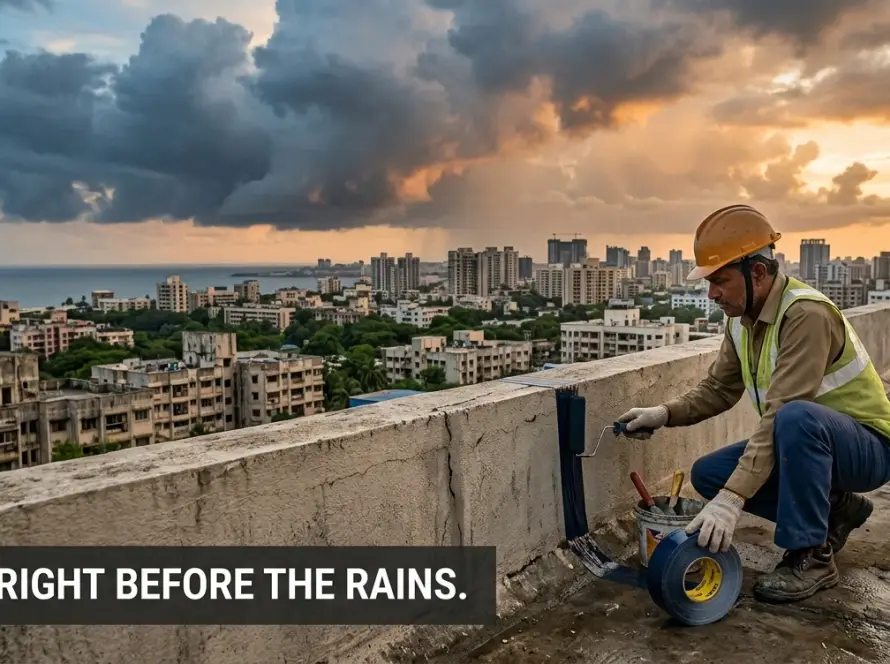
Water has its way of finding even the smallest gap. And when it does, the results become too expensive to comprehend. From roof leaks and façade failures to recurring maintenance calls, waterproofing issues continue to be one of the biggest headaches across the construction industry. The challenge? Traditional sealants and coatings require a lot of time to cure, involve multiple steps in application, and can slow down project timelines.
This is what makes contractors prefer butyl tape for construction, especially for waterproofing tasks. Not only does it deliver an immediate adherence, but it can also bond to a wide range of surfaces. Thus, your crews can get the job done much faster. Having said that, below we have illustrated the five key areas in construction where butyl tape has become a go-to waterproofing solution.
Why are construction projects moving beyond traditional waterproofing?
For decades, liquid waterproofing solutions have dominated the construction industry. With tightened project timelines and rising performance expectations, these no longer suffice. Rather, you need to rethink traditional methods in favor of faster, more dependable solutions. Here’s why!
- Liquid coatings and mastics are indeed effective in several situations. However, they often struggle with surface irregularities, application inconsistencies, and long-term maintenance challenges.
- Installation is heavily influenced by weather conditions. Humidity, rain, and temperature fluctuations can delay work, affect adhesion, or compromise overall waterproofing performance.
- Applying the traditional systems is labor-intensive. It requires surface preparation, multiple coats, specialized equipment units, and skilled professionals to achieve consistent coverage.
- Long curing times can slow down construction schedules and create project bottlenecks. Even then, uneven application often causes weak spots.
- With growing pressure to reduce labor costs and accelerate project completion, only advanced waterproofing solutions can offer immediate protection and faster installation.
What makes Butyl Waterproofing tape different?
Not all waterproofing materials work the same way. What sets butyl tape apart as a construction waterproofing tape is its unique combination of instant adhesion, long-term flexibility, and environmental durability.
- It’s made from high-performance butyl rubber, engineered specifically for sealing and waterproofing applications.
- It can maintain a permanent tack, allowing it to stay flexible and effective even as building materials expand and contract.
- The tape can bond strongly to metal, glass, concrete, wood, plastics, and other common construction surfaces.
- Butyl can resist water penetration, UV exposure, and temperature fluctuations, thereby ensuring reliable performance in demanding environments.
How does Butyl tape create a watertight seal?

The effectiveness of butyl tapes comes from their ability to adapt to the surface where you are applying them. Here’s how it creates a tight water seal that other traditional solutions can’t.
- Conforming easily to uneven, textured, or irregular surfaces
- Filling tiny gaps, joints, and cracks that are likely to allow moisture intrusion
- Creating an immediate waterproof barrier without curing, drying, or additional processing
Construction site #1: Metal roofing systems
Metal roofs are constantly exposed to rain, sun, wind, and temperature swings. Over time, traditional sealants often harden, crack, or lose adhesive strength. You start noticing the problems more prominently when metal panels start expanding and contracting every day. This creates stress on joints and seams that conventional waterproofing cannot resolve.
Why Butyl Waterproofing tape wins?
- As metal roofing systems undergo constant thermal cycles, butyl tape stretches and compresses in accordance with the panels. This helps maintain seam integrity without splitting or pulling away from the substrate.
- It seals roof laps, standing seam connections, flashing transitions, and faster penetrations immediately after application. This helps reduce the risks of weather-related installation delays.
- By preventing water infiltration at critical roof joints, butyl tape extends roof service life while minimizing leak investigations, emergency repairs, and maintenance expenses.
Construction site #2: Window & door flashing
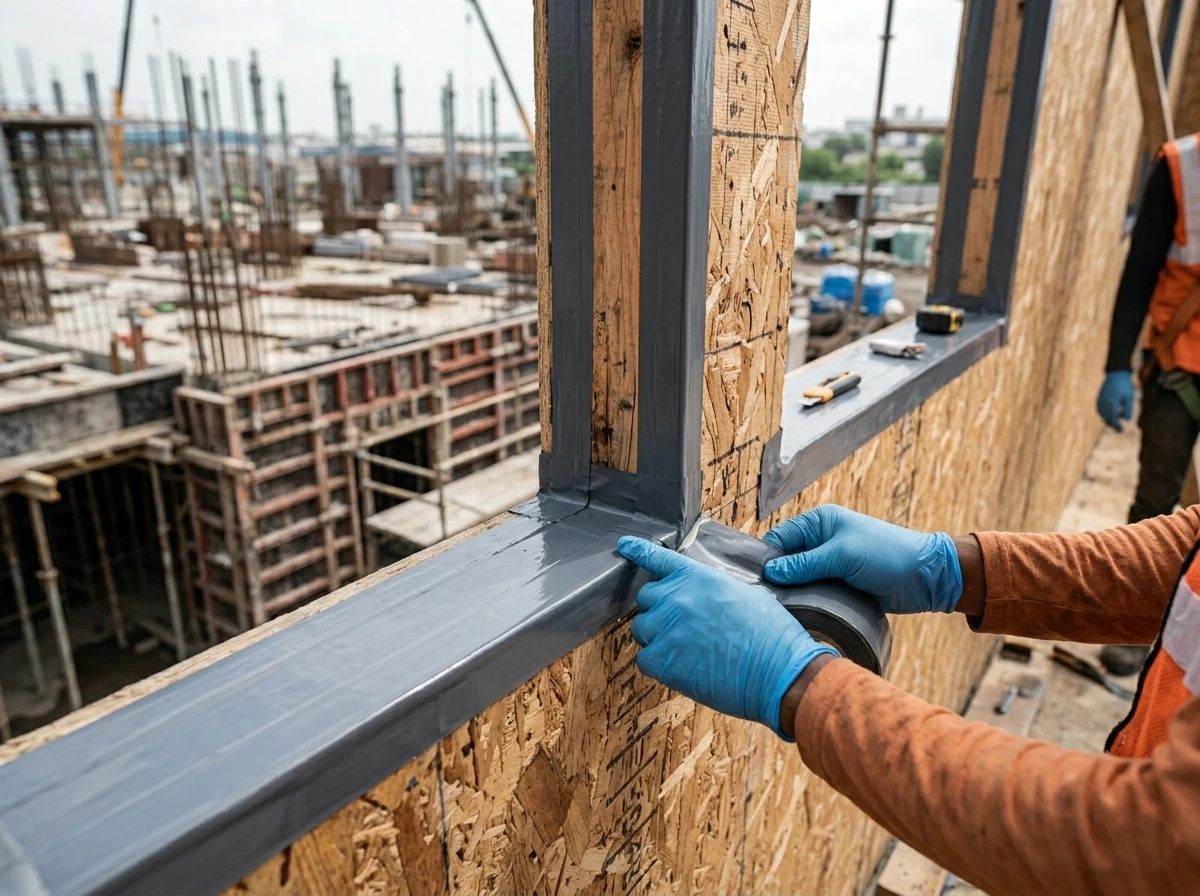
A waterproofing failure around a window or door seldom stays isolated. Water travels behind cladding, saturates insulation, and damages inferior finishes before the issue surfaces. As the frames are made from different materials than the surrounding walls, movements at these transition points cause vulnerabilities that traditional flashing systems cannot protect.
Benefits of Butyl Waterproofing tape
- These create a continuous flashing membrane between window frames and surrounding wall assemblies, thereby helping eliminate common pathways for hidden water ingress.
- The tapes can easily wrap corners, sill pans, rough openings, and irregular details where liquid-applied products can be difficult to apply.
- Windows and door flashing are considered one of the primary butyl tape applications because the product can maintain a dependable seal around frame perimeters.
Construction site #3: Concrete expansion joints
Expansion joints are designed to absorb structural movement. However, they also create potential pathways for water infiltration. Traditional sealants shrink, crack, or separate from the concrete surfaces with time. Therefore, you end up with recurring repair needs and huge ongoing maintenance expenses.
Why do contractors prefer butyl tape?
- The tape remains pliable as slabs, walls, and concrete sections move, thereby allowing joints to function as intended without compromising waterproofing protection.
- Its compressible nature helps span small surface defects, voids, and developing cracks that usually appear around expansion joint assemblies.
- Installation is pretty straightforward and less dependent on curing conditions. That’s why butyl waterproofing tapes are useful for large commercial projects where speed and consistency are critical.
Construction site #4: Prefabricated & modular buildings
These construction components contain more connection points than traditional structures. Every wall panel, roof section, floor cassette, and module-to-module junction creates a potential entry point for water. As modules are manufactured off-site and assembled quickly on location, waterproofing systems shouldn’t create bottlenecks during installation.
Advantages of Butyl Waterproofing tapes
- These create an instant seal between prefabricated panels and module joints, preventing moisture penetration during transportation, storage, and final installation.
- Site-applied or factory-applied butyl tape delivers uniform coverage and thickness, which further minimizes the risks of inconsistent waterproofing at joineries.
- These tapes do not require curing or drying time, allowing your assembly crews to complete waterproofing and structural installation in the same workflow.
Construction site #5: HVAC ducting & building services
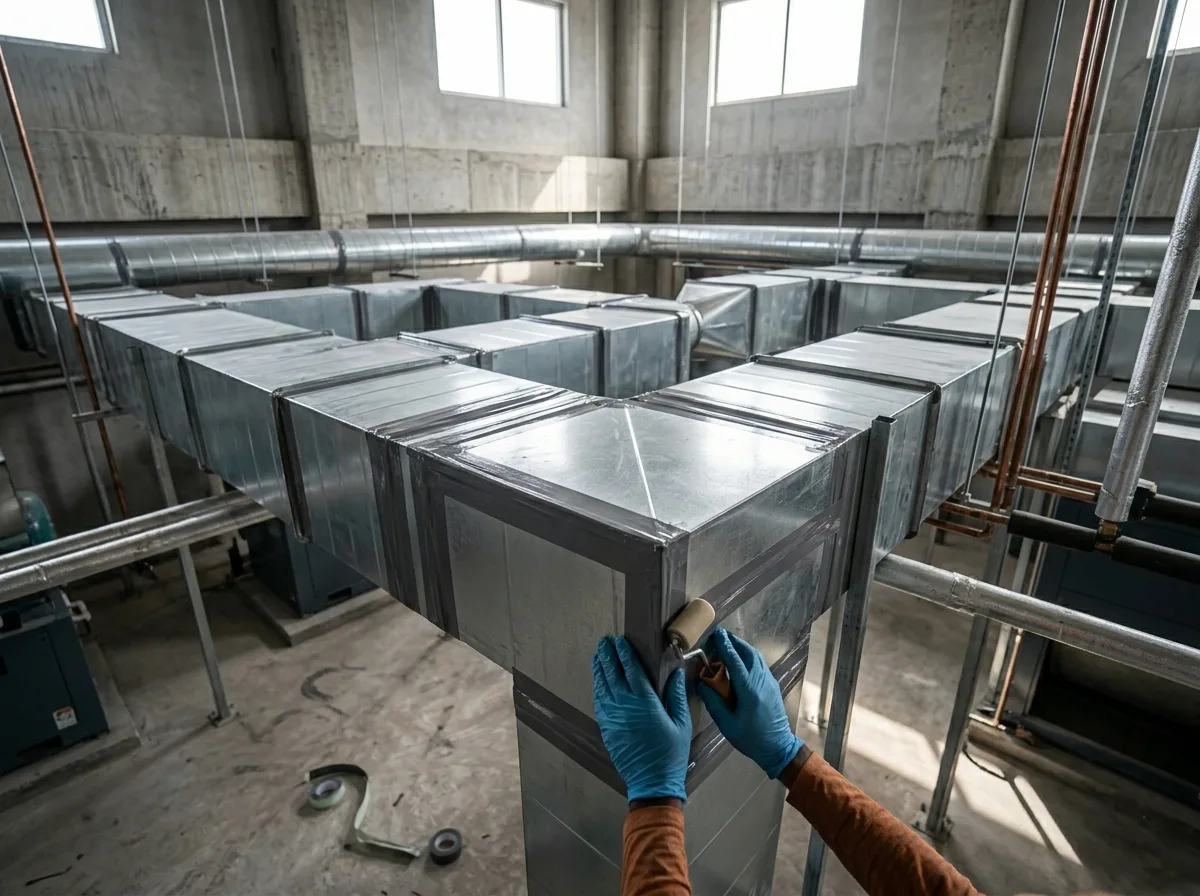
HVAC systems heavily depend on tightly sealed ductwork to maintain airflow efficiency. However, duct joints, seams, and service penetrations are the common leakage points. Apart from this, temperature differences between conditioned air and the surrounding environments can create condensation. This introduces moisture, which ultimately damages insulation, equipment units, and adjacent building materials.
Why does Butyl Waterproofing tape outperform?
- It forms a high-strength bond to sheet metal ducts, duct flanges, ventilation housings, and mechanical service components without requiring additional sealants.
- It can maintain an airtight and moisture-resistant seal despite vibrations, pressure fluctuations, and temperature changes common in HVAC systems.
- You can prevent air leakage at duct connections, thereby improving system efficiency, reducing HVAC workload, and helping lower overall energy consumption.
Butyl Waterproofing tape vs traditional waterproofing methods
Here is a detailed comparison of butyl tape vs traditional waterproofing solutions that you must know.
| Feature | Butyl Waterproofing tape | Traditional Sealants & Liquid Waterproofing |
| Installation Time | Peel-and-apply application with immediate sealing | Requires surface preparation, application, and curing time |
| Waterproofing Performance | Instant watertight seal upon installation | Waterproofing effectiveness is achieved only after curing |
| Weather Dependency | Can be installed in a wider range of site conditions | Performance and application are often affected by rain, humidity, and temperature |
| Labor Requirements | Minimal labor and simple installation process | More labor-intensive, often requiring skilled applicators |
| Application Consistency | Factory-manufactured thickness ensures uniform sealing | Quality depends heavily on application technique and coating thickness |
| Flexibility | Remains flexible and accommodates structural movement | Can harden, shrink, or crack over time |
| Adhesion to Multiple Surfaces | Bonds well to metal, concrete, glass, wood, PVC, and masonry | Surface compatibility varies by product type |
| Maintenance Needs | Lower maintenance due to durable, long-lasting seals | More frequent inspections and repairs may be required |
| Project Speed | Helps accelerate construction schedules | Curing and rework can delay project completion |
| Best Use Cases | Roofing seams, flashing, expansion joints, modular buildings, HVAC ducting | Large-area coatings, specialized waterproofing systems, and certain protective coatings |
Key benefits for contractors and procurement managers
Waterproofing products need to be evaluated not just based on their sealing performance. Labor efficiency, installation speed, reliability, and procurement consistency directly affect the project’s profitability. Having said that, we have discussed the reasons that make butyl roll the best waterproofing tape for construction tasks.
- Faster project delivery: It eliminates curing delays and allows waterproofing work to be completed and inspected immediately after installation.
- Lower labor costs: As its installation is pretty simple with a peel-and-apply mechanism, you won’t have to worry about prolonged application times.
- Reduced waterproofing failures: The butyl tape creates a uniform seal that helps prevent leaks commonly caused by cracks, shrinkage, or uneven sealant application.
- Improved quality control: Factory-manufactured dimensions and thickness ensure consistent performance across every installation.
- Unwavering performance across sites: These tapes deliver reliable results on different project types, helping contractors standardize waterproofing practices across multiple sites.
Why choose Gripking Butyl Waterproofing tape?
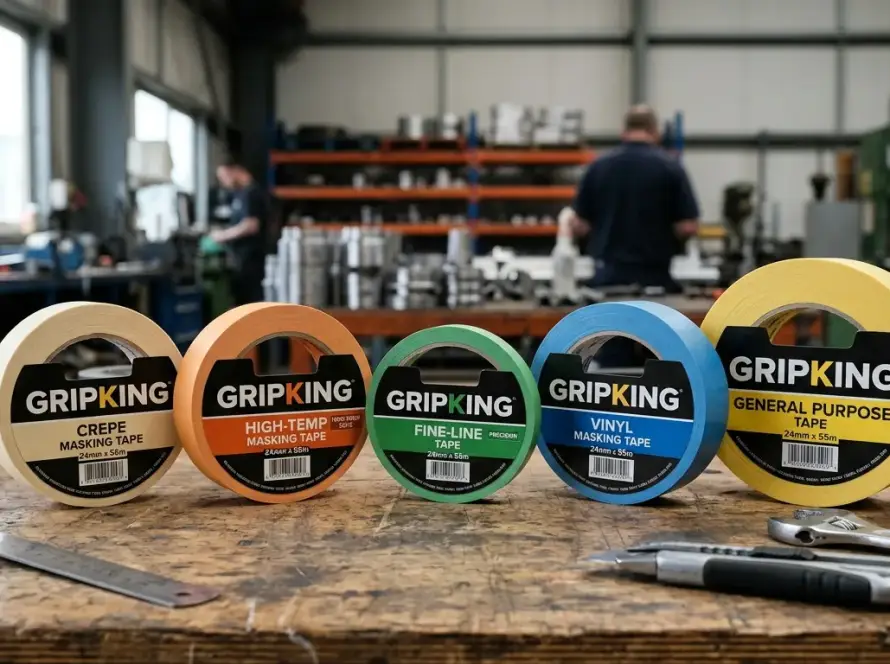
At Gripking, every butyl tape is engineered to meet the practical demands of Indian construction projects. Whether it’s prolonged exposure to rain, high temperatures, or diverse building materials, these tapes deliver dependable waterproofing performance. Here’s why you can rest assured that your investment in Gripking’s butyl tape will be worthwhile.
- It’s designed to withstand heat, humidity, heavy rainfall, and seasonal weather variations common across different regions of India.
- The tape shows strong adhesion on diverse building materials, including concrete, metal, glass, and plastic.
- As multiple widths and thickness options are available, you can select the right specification for different joint sizes and sealing requirements.
- These are versatile enough for roofing, flashing, modular construction, HVAC systems, and expansion joints.
- With bulk supply available across India, these tapes support large-scale projects with streamlined procurement.
Are you looking for a faster, more reliable waterproofing solution for your construction project in India? Explore Gripking’s industrial-grade butyl tape range. Request a bulk quote today or connect with our experts to learn more about our product’s specifications.
FAQs
1. What is butyl tape used for in construction?
The butyl tape seals joints, seams, flashings, penetrations, and connections to prevent water intrusion and minimize structural damage.
2. Is butyl tape better than liquid waterproofing?
For several application areas, like the HVAC system or metal roofing panels, butyl tapes offer faster installation, immediate sealing, and greater consistency.
3. Can butyl tape be applied to concrete surfaces?
Yes, butyl tapes can adhere to properly prepared concrete, masonry, and similar substrates without compromising sealant performance.
4. How long does butyl tape last outdoors?
Yes, high-quality butyl tapes offer reliable outdoor sealing performance for many years to come.
5. Is butyl tape suitable for roofing applications?
You can use butyl tape for metal roofs, flashing details, and roof penetrations across different construction regions.
6. Does Gripking supply butyl tape in bulk quantities?
Yes, Gripking offers bulk supply options for both commercial and industrial construction projects across India.